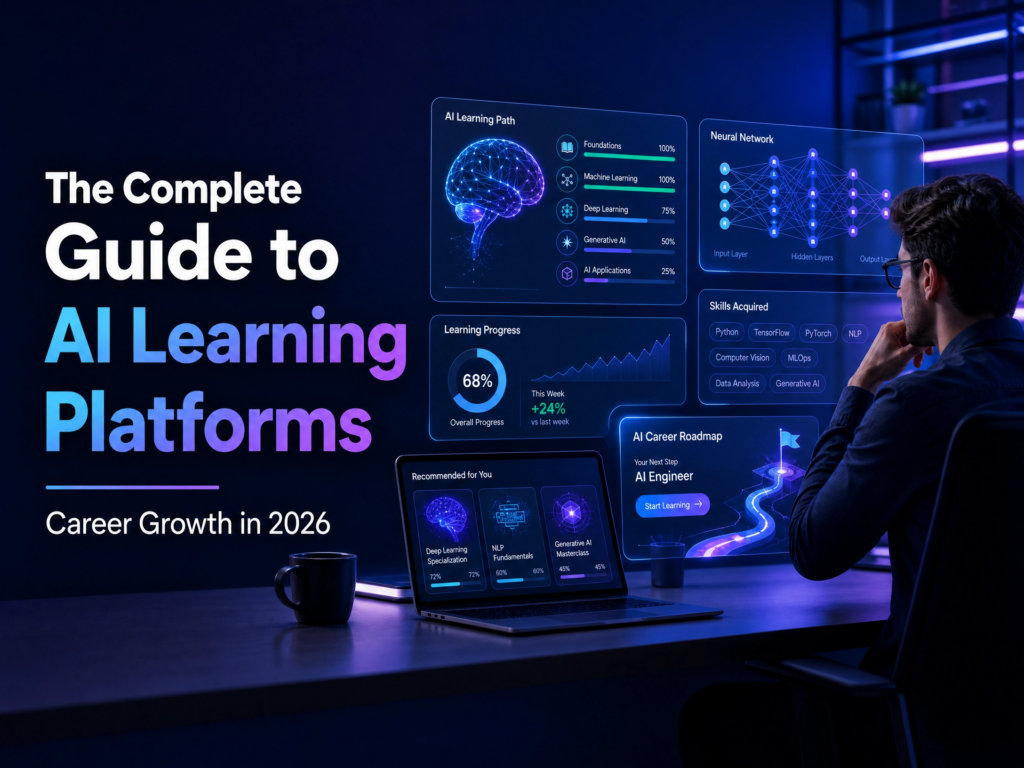
Discover how AI learning platforms support career growth through personalized learning, skills development, and professional training. Compare leading platforms, learn what features matter most, and find the right solution for your career goals in 2026.
Key Takeaways
- AI learning platforms use data, automation, and learner behavior insights to create more relevant learning experiences than traditional online learning models.
- Professionals can use AI learning platforms to acquire job-ready skills, transition into new careers, and stay competitive in rapidly changing industries.
- AI learning differs from traditional online learning through dynamic learning pathways, tailored content delivery, and greater flexibility.
- The best AI learning platforms combine quality content, expert instruction, practical learning experiences, and career development support.
- Choosing the right platform depends on your goals, preferred learning format, industry focus, and long-term professional development needs.
Career growth no longer follows a fixed path. Industries evolve quickly, new technologies emerge constantly, and employers increasingly value practical skills alongside formal qualifications. As a result, professionals must continuously learn to stay competitive.
This shift has created demand for more flexible and effective learning experiences. AI learning platforms help learners discover relevant content, build in-demand skills, and progress toward their career goals more efficiently than traditional learning models.
In this guide, you’ll learn what AI learning platforms are, how they differ from traditional online learning, why they matter for career growth, and how to choose the right platform in 2026.
What Is an AI Learning Platform?
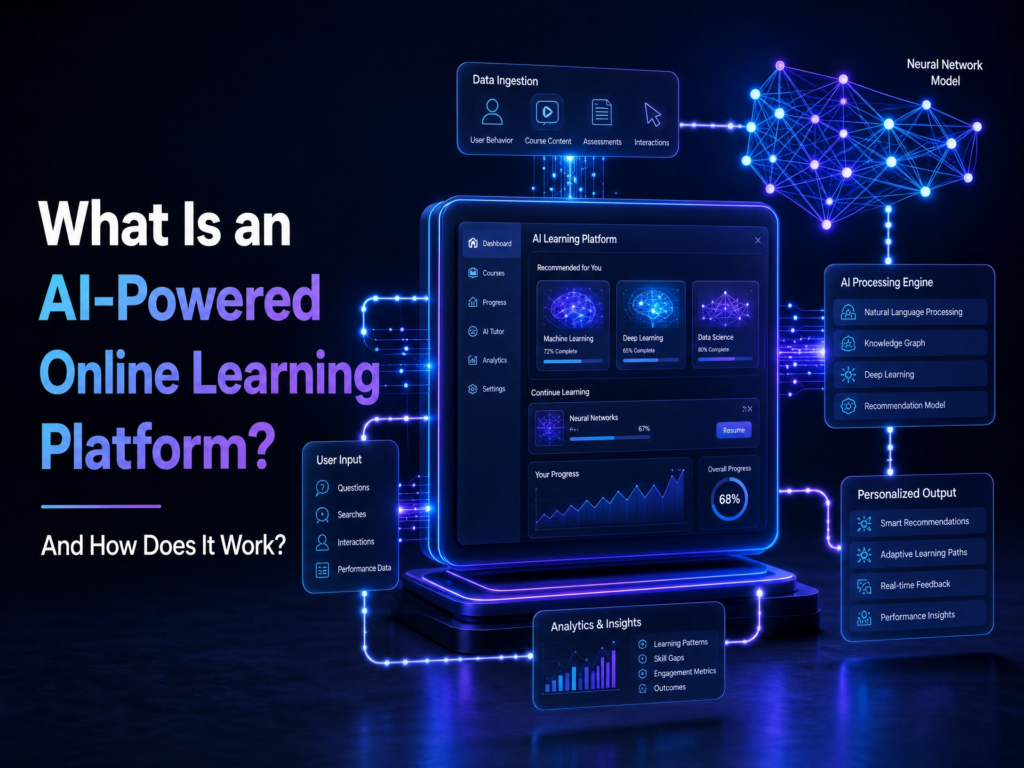
An AI learning platform is an online learning environment that uses artificial intelligence, data analysis, and automation to create more personalized and effective learning experiences. Rather than delivering the same content to every learner, these platforms use information such as learning goals, progress, interests, and performance to help users navigate their educational journey more efficiently.
The goal is not simply to provide access to courses but to help learners develop relevant skills, stay engaged, and make meaningful progress toward their personal or professional objectives.
How AI Learning Platforms Differ from Traditional Learning Management Systems
Traditional Learning Management Systems (LMSs) are designed primarily to organize and deliver educational content. They allow institutions and organizations to manage courses, track learner progress, and store training materials.
AI learning platforms go a step further. In addition to delivering content, they help learners determine what to learn next, identify potential skill gaps, and discover learning opportunities that align with their goals.
For example, someone pursuing a career in data analytics may be guided toward courses in statistics, data visualization, and business intelligence. Meanwhile, a software developer interested in cloud computing may receive recommendations focused on cloud architecture, DevOps, and infrastructure management. While both learners use the same platform, their learning paths can be very different.
How AI Learning Platforms Differ from Course Marketplaces
Course marketplaces focus on providing access to large libraries of educational content. Learners browse available courses and decide for themselves what to take based on their interests or immediate needs.
AI learning platforms place greater emphasis on guidance and progression. Instead of simply offering thousands of course options, they help learners navigate those options by connecting learning activities to specific goals, skills, and outcomes.
This shift from content discovery to learning guidance is one of the defining characteristics of modern AI-powered education.
The Role of AI in Modern Learning
Artificial intelligence is changing how learners discover knowledge, develop skills, and progress toward their goals. Rather than simply delivering educational content, AI helps create learning experiences that are more responsive to individual needs and objectives.
Helping Learners Find the Right Starting Point
Not every learner begins from the same place. Some may be complete beginners, while others already have experience and are looking to build specialized skills.
AI can analyze factors such as learning history, assessment results, and user behavior to help identify a learner’s current level and guide them toward appropriate learning opportunities.
Making Learning Paths More Relevant
Online learning platforms often contain hundreds or even thousands of courses. Finding the right content can be overwhelming.
AI helps narrow these choices by surfacing courses, workshops, and resources that align with a learner’s interests, goals, and skill level. This allows learners to spend less time searching and more time developing meaningful skills.
For example, a marketing professional learning data analytics may be directed toward reporting tools, business intelligence, and marketing measurement. A learner exploring technology for the first time may begin with foundational concepts before advancing to specialized topics.
Supporting Ongoing Progress
Learning is not a one-time activity. As learners complete courses and gain new skills, their needs evolve.
AI can help track progress, identify areas for improvement, and suggest next steps that support continued development. This creates a more structured learning journey rather than a collection of disconnected courses.
Encouraging Continuous Skill Development
Career growth often requires ongoing learning. AI can help learners discover new opportunities based on changing interests, industry trends, and professional goals, making it easier to maintain momentum over time.
What AI Cannot Do
Despite its benefits, AI is not a replacement for effective teaching, practical experience, or personal commitment.
AI cannot develop skills on a learner’s behalf, replace expert instructors, or guarantee career outcomes. Real growth still comes from applying knowledge, completing projects, practicing consistently, and gaining hands-on experience.
The most effective learning environments combine intelligent technology with human guidance, practical application, and a clear commitment to continuous improvement.
Why AI Learning Platforms Matter for Career Growth
The biggest advantage of AI learning platforms is not the technology itself. It is their ability to help people develop relevant skills, adapt to changing job markets, and make more informed learning decisions throughout their careers.
As industries evolve and new roles emerge, professionals need learning experiences that support continuous growth rather than one-time education. AI learning platforms help address this challenge by making learning more focused, efficient, and aligned with real-world career goals.
Accelerating Skill Development
One of the most common challenges learners face is deciding what to learn next. With thousands of courses, certifications, and training programs available online, it is easy to spend more time searching for learning opportunities than actually learning.
AI learning platforms help simplify this process by connecting learners with content that aligns with their goals and current skill level. This allows professionals to focus their energy on developing valuable skills instead of navigating endless learning options.
Supporting Career Changes and New Opportunities
Career transitions have become increasingly common across industries. Professionals frequently move into new roles, explore adjacent fields, or pursue entirely different career paths.
For example:
- A teacher may transition into instructional design.
- An accountant may move into data analytics.
- A customer service professional may pursue project management.
These transitions often require targeted skill development rather than a complete return to formal education. AI learning platforms can help learners identify the most relevant knowledge and competencies needed for their next career move.
Keeping Skills Relevant in a Changing Workforce
The modern workplace changes quickly. New technologies, tools, and business practices continuously reshape how work is performed.
Technology professionals need to stay current with emerging frameworks and platforms. Marketers must adapt to changing consumer behavior and digital channels. Business leaders need to understand evolving technologies and market trends.
Continuous learning is no longer optional for long-term career success. It has become an essential part of professional development.
Aligning Learning With Employer Expectations
Many employers now place greater emphasis on demonstrated skills and practical experience than on credentials alone.
Projects, portfolios, certifications, and measurable outcomes often carry significant weight during hiring and promotion decisions. As a result, professionals benefit from learning environments that focus on building applicable skills that can be used in real-world situations.
Accessing In-Demand Skills More Efficiently
Many of today’s fastest-growing career opportunities require knowledge in emerging fields such as:
- Artificial Intelligence
- Data Analytics
- Cybersecurity
- Cloud Computing
- Digital Marketing
- Product Management
- Automation Technologies
AI learning platforms make it easier for learners to discover and develop these skills, helping them remain competitive as industries and workforce demands continue to evolve.
Ultimately, AI learning platforms support career growth by helping learners focus on the right skills at the right time, making continuous professional development more practical and achievable.
AI Learning vs Traditional Online Learning
Online learning has evolved significantly over the past decade. While traditional online learning remains popular, AI-powered learning platforms are introducing a more personalized approach to education.
Both models can help learners develop new skills and knowledge, but they differ in how they deliver content, guide learning decisions, and support career development.
The Core Difference
Traditional online learning follows a structured path. Learners typically move through the same curriculum, lessons, and assessments regardless of their background or goals.
AI learning platforms take a more adaptive approach. Rather than providing the same experience to every learner, they use data, learning behavior, and objectives to help learners discover relevant content and navigate their learning journey more efficiently.
The difference is not necessarily what people learn, but how they learn it.
AI Learning vs Traditional Online Learning at a Glance
| Area | AI Learning | Traditional Online Learning |
| Learning Path | Adapts to learner goals and progress | Follows a predefined curriculum |
| Content Discovery | Guided recommendations | Manual course selection |
| Learning Experience | Personalized and flexible | Standardized and consistent |
| Pace | Learner-driven | Program-driven |
| Support | Data-informed guidance | Instructor or curriculum-led |
| Career Alignment | Focused on individual goals | Often broader and less targeted |
Which Learning Model Works Best for Different Learners?
The effectiveness of either approach often depends on the learner’s situation and objectives.
For New Graduates
Graduates entering the workforce often need a combination of technical knowledge, workplace skills, portfolio development, and career preparation.
Traditional learning can provide a strong educational foundation, while AI learning platforms can help graduates prioritize the skills most relevant to their desired career path.
For Working Professionals
Professionals balancing work and personal responsibilities usually have limited time available for learning.
In these situations, AI learning platforms can help reduce time spent searching for courses by recommending learning opportunities aligned with immediate career goals, such as leadership development, project management, or technical upskilling.
For Career Changers
Career transitions often require learners to develop a specific set of skills within a relatively short period.
Rather than completing broad learning programs, career changers typically benefit from focused learning pathways that help them identify skill gaps and concentrate on the competencies required for their target role.
When Traditional Online Learning Makes Sense
Traditional online learning remains valuable in situations where consistency and standardization are important.
Examples include:
- Academic programs
- Professional certifications
- Compliance training
- Regulatory education
- Structured workforce training
In these environments, ensuring that every learner receives the same instruction is often essential.
When AI Learning Offers an Advantage
AI learning platforms are often most beneficial when learners have unique goals, changing career objectives, or limited time available for training.
They can help learners:
- Identify relevant skills more quickly
- Reduce time spent searching for content
- Focus on career-specific learning outcomes
- Navigate large content libraries more efficiently
- Build personalized learning pathways
Which Approach Is Better?
There is no single answer. Traditional online learning provides structure and consistency, while AI learning platforms offer flexibility and personalization.
For many learners, the ideal solution combines elements of both. A structured curriculum can provide a strong foundation, while AI-powered guidance can help learners focus on the skills, resources, and opportunities most relevant to their goals.
How to Choose the Right AI Learning Platform
Not all AI learning platforms are built for the same purpose. Some focus on academic learning, while others emphasize professional development, technical skills, corporate training, or creative education.
Choosing the right platform starts with understanding what you want to achieve and evaluating whether a platform can support those goals effectively.
Define Your Learning Goal
Before comparing platforms, identify the primary outcome you want from the learning experience.
For example, you may be looking to:
- Learn a new skill
- Earn a professional certification
- Prepare for a promotion
- Transition into a new career
- Stay current in your industry
- Train employees or teams
Your objective should guide every other evaluation criterion. A platform that works well for career changers may not be the best fit for corporate training, and a platform designed for technical education may not meet the needs of creative professionals.
Consider How You Prefer to Learn
Learning formats vary significantly across platforms. Some prioritize self-paced courses, while others emphasize instructor-led experiences and collaborative learning.
Common learning formats include:
- Self-paced courses
- Live virtual classes
- Workshops
- Cohort-based programs
- Blended learning experiences
For example, learners who value flexibility may prefer self-paced programs, while those who benefit from direct interaction and accountability may find live classes or cohort-based learning more effective.
Evaluate the Quality of Instruction
The quality of a learning platform is often reflected in the quality of its instructors.
When evaluating a platform, consider:
- Industry experience
- Practical expertise
- Teaching ability
- Student reviews and feedback
- Use of real-world examples and case studies
Strong instructors help bridge the gap between theory and practical application, making learning more valuable and engaging.
Focus on Learning Outcomes, Not Course Quantity
Many platforms promote the size of their course catalog, but more courses do not necessarily translate into better learning outcomes.
A smaller, well-curated learning library can often provide greater value than thousands of loosely organized courses.
Instead of focusing on volume, assess:
- Content quality
- Course relevance
- Curriculum structure
- Practical applicability
- Learning pathways
The best platforms help learners make progress toward their goals rather than simply providing more content.
Look for Career Development Support
Learning is only one part of professional growth. Many learners also benefit from resources that help them apply their knowledge and advance their careers.
Valuable support features may include:
- Mentorship opportunities
- Professional communities
- Hands-on projects
- Portfolio development
- Internship opportunities
- Career readiness resources
These features can play a significant role in helping learners translate education into real-world outcomes.
Consider Long-Term Growth
The ideal platform should support more than a single course or certification. As your skills and career goals evolve, your learning needs will change as well.
Look for platforms that provide opportunities for continued learning, skill development, and professional advancement over time.
Additional Considerations for Organizations
Organizations evaluating AI learning platforms should assess factors beyond individual learning experiences.
Important considerations include:
- Workforce development objectives
- Reporting and analytics capabilities
- Team management features
- Corporate training solutions
- Scalability across departments and locations
A platform that supports both employee development and organizational goals is often the strongest long-term investment.
Ultimately, the best AI learning platform is the one that aligns with your goals, learning preferences, and career aspirations. Rather than focusing solely on features, prioritize platforms that can help you achieve meaningful and measurable outcomes.
Best AI Learning Platforms for Career Growth in 2026
Not every learning platform is designed for the same type of learner. Some focus on university-backed credentials, while others prioritize practical skills, workplace training, creative education, or professional development.
The platforms below were evaluated based on career relevance, learning experience, flexibility, practical application, instructor access, and professional development support.
Alkademy
Best For: Learners seeking a complete professional development ecosystem.
Strengths:
- Combines courses, live classes, and workshops
- Focuses on workforce readiness and career development
- Supports both individual learners and organizations
- Offers multiple learning formats
Limitations:
- Newer platform compared to established global learning brands
- Smaller content library than large course marketplaces
Ideal Learner:
Students, graduates, working professionals, career changers, and organizations looking for a more connected learning experience.
Learning Style:
Self-paced learning, live virtual classes, instructor-led training, and workshops.
Notable Features:
AI-powered learning ecosystem, corporate training solutions, instructor engagement, internship opportunities, and professional development resources.
Coursera
Best For: Learners pursuing university-backed education and professional credentials.
Strengths:
- Partnerships with leading universities and institutions
- Strong professional certificate offerings
- Academic credibility
- Structured learning pathways
Limitations:
- Some programs can be costly
- Less emphasis on live instructor interaction
Ideal Learner:
Professionals seeking recognized credentials and academic rigor.
Learning Style:
Primarily self-paced courses and structured certificate programs.
Notable Features:
University partnerships, professional certificates, degree programs, and industry-recognized credentials.
LinkedIn Learning
Best For: Business professionals focused on workplace skills.
Strengths:
- Extensive business and leadership content
- Strong professional development focus
- Integration with LinkedIn profiles
Limitations:
- Limited academic depth
- Fewer structured certification pathways
Ideal Learner:
Managers, business professionals, and employees are seeking workplace skill development.
Learning Style:
Self-paced video learning.
Notable Features:
Leadership training, productivity courses, and LinkedIn integration.
Udemy
Best For: Affordable self-paced learning across a wide range of subjects.
Strengths:
- Massive course selection
- Competitive pricing
- Broad subject coverage
Limitations:
- Course quality varies by instructor
- Limited learning pathway guidance
Ideal Learner:
Independent learners exploring new skills on a budget.
Learning Style:
Self-paced learning.
Notable Features:
Large course marketplace, lifetime access purchases, and frequent discounts.
edX
Best For: Academic learning and professional certificate programs.
Strengths:
- University-developed content
- Professional and executive education programs
- Structured educational experiences
Limitations:
- More formal learning approach
- Less flexibility than some alternatives
Ideal Learner:
Learners seeking academic depth and structured progression.
Learning Style:
Self-paced and instructor-supported programs.
Notable Features:
University partnerships, professional certificates, executive education, and degree pathways.
Skillshare
Best For: Creative professionals and project-based learners.
Strengths:
- Strong creative community
- Hands-on learning approach
- Project-focused instruction
Limitations:
- Limited business and professional certification content
- Less suitable for formal career pathways
Ideal Learner:
Designers, creators, freelancers, and entrepreneurs.
Learning Style:
Project-based, self-paced learning.
Notable Features:
Creative learning tracks, community projects, and portfolio-focused learning.
Why Alkademy Stands Out
Many online learning platforms are built around course consumption. While courses remain an important part of learning, career growth often requires a broader support system that includes practical experience, instructor interaction, and continuous skill development.
This is where Alkademy differentiates itself.
A Learning Experience Beyond Courses
Modern learners engage with knowledge in different ways. Some prefer self-paced learning, while others benefit from live instruction, collaborative workshops, or direct access to experts.
Alkademy supports multiple learning formats, including:
- Online courses
- Live virtual classes
- Workshops
- Instructor-led sessions
- Interactive learning experiences
This flexibility allows learners to choose the learning environment that best matches their goals and preferences.
Built Around Professional Growth
Learning is most valuable when it contributes to measurable career outcomes.
Rather than focusing solely on content delivery, Alkademy emphasizes practical skills, workforce readiness, and professional development. Learners can build knowledge while developing capabilities that support career advancement and long-term employability.
Supporting Individuals and Organizations
Alkademy serves a wide range of audiences, including:
- Students
- Graduates
- Working professionals
- Career changers
- Teams
- Businesses
- Educational institutions
This broad focus allows the platform to support both individual career development and organizational learning initiatives.
A Connected Learning Ecosystem
One of Alkademy’s strongest differentiators is its ecosystem approach to learning.
Courses, instructors, workshops, publishing resources, training programs, and professional development opportunities work together to create a more complete learning experience. Instead of treating learning as a series of disconnected activities, the platform helps learners build skills through multiple forms of engagement.
For learners seeking a platform that supports continuous growth rather than isolated course completion, this integrated approach can provide significant long-term value.
FAQs
What Is an AI Learning Platform?
An AI learning platform is an online learning system that uses artificial intelligence, data analysis, and automation to create more personalized learning experiences. These platforms help learners discover relevant content, identify skill gaps, track progress, and navigate learning pathways that align with their goals.
How Do AI Learning Platforms Support Career Growth?
AI learning platforms support career growth by helping learners focus on relevant skills, reducing the time spent searching for content, and accessing learning opportunities that align with their professional objectives. They can also support career transitions, continuous professional development, and the acquisition of in-demand skills.
What Are the Benefits of Personalized Learning in Online Education?
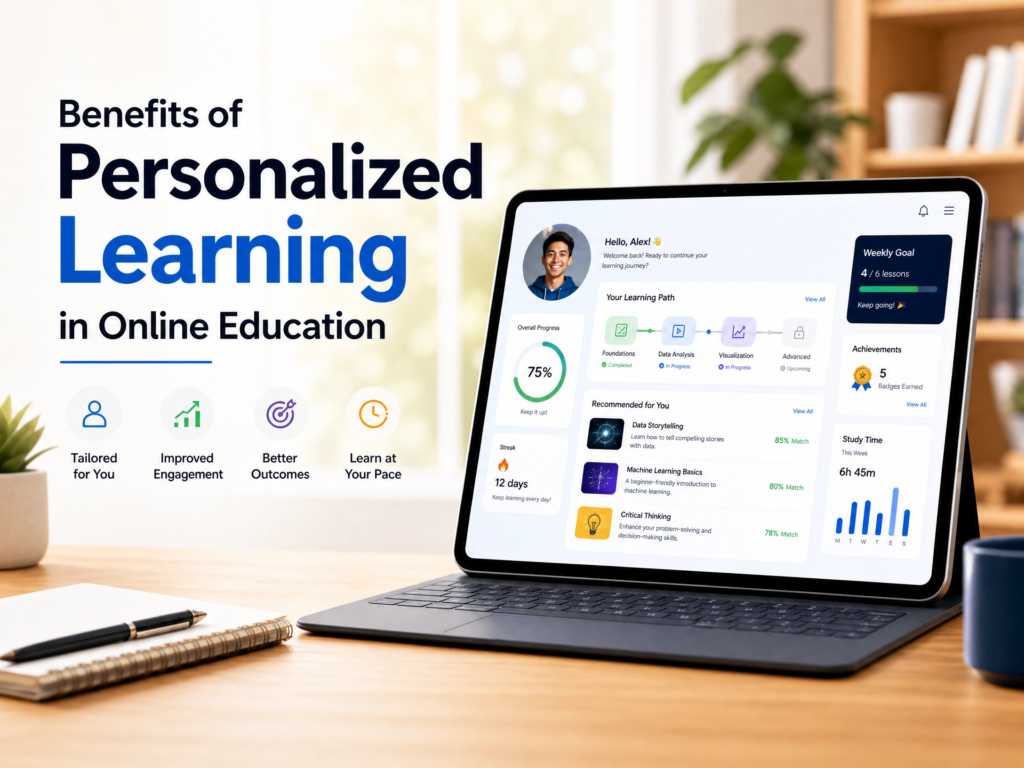
Personalized learning helps learners focus on content that matches their needs, interests, and goals. This can improve engagement, reduce unnecessary coursework, support skill development, and create a more efficient learning experience compared to standardized learning pathways.
What Is the Difference Between AI Learning and Traditional Online Learning?
Traditional online learning typically follows a fixed curriculum that delivers the same learning experience to every participant. AI learning platforms take a more adaptive approach by providing guidance, recommendations, and learning pathways that can be influenced by learner behavior, progress, and objectives.
What Is the Best AI-Powered Online Learning Platform for Career Growth?
The best AI-powered online learning platform depends on your goals, preferred learning style, and career aspirations. When evaluating platforms, consider factors such as learning formats, instructor quality, practical learning opportunities, career support, and long-term professional development resources.
Conclusion
The future of career development belongs to continuous learning. As industries evolve and new technologies reshape the workplace, professionals need effective ways to build skills, adapt to change, and remain competitive throughout their careers.
AI learning platforms are helping meet this need by making learning more personalized, accessible, and aligned with real-world goals. Instead of navigating endless courses and resources alone, learners can benefit from guidance that helps them focus on the skills and knowledge that matter most.
Whether you’re developing new competencies, preparing for a promotion, changing careers, or training a workforce, choosing the right learning platform can significantly impact your success. The most valuable platforms do more than deliver content. They help learners build practical skills, gain confidence, and create clear pathways toward long-term professional growth.
Platforms such as Alkademy reflect the broader evolution of online learning by combining courses, live classes, workshops, instructor engagement, and professional development opportunities within a connected learning ecosystem. This approach recognizes that career growth often requires more than content alone. It requires access to practical learning experiences, expert guidance, and continuous skill development.