Online tutoring vs self-paced learning: discover the differences in flexibility, cost, feedback, and accountability to choose the right learning approach.
TL;DR
- Online tutoring provides direct instructor support, personalised feedback, and structured lessons.
- Self-paced learning gives you the freedom to study whenever you want and progress at your own speed.
- Tutoring is useful when you need guidance, clarification, or accountability.
- Self-paced learning suits independent learners who value flexibility and affordability.
- Combining both can help you enjoy independent learning while getting support when necessary.
Learning online gives you plenty of options. You can work with a tutor, take an online course, or study independently using digital resources.
A 2019 study published in Open Praxis compared tutor-led and self-paced online courses. It found similar quiz scores and course completion rates, although tutor-led courses encouraged more learner discussions.
This highlights an important difference: both approaches can support learning, but they offer different levels of guidance and interaction. So, which one is right for you? Let’s compare their benefits to help you decide.
Table of Contents
What Is Online Tutoring?
Online tutoring involves learning directly from an instructor through digital platforms.
Lessons usually take place through video calls, virtual classrooms, or other online communication tools.
The biggest advantage is access to someone who can explain difficult concepts, answer questions, review your work, and guide your progress.
Common types of online tutoring include:
- One-on-one tutoring: Individual lessons tailored to your learning needs.
- Group tutoring: Small-group sessions where students learn together.
- Live online classes: Scheduled lessons with opportunities to interact with instructors.
- Subject-specific tutoring: Targeted support in subjects such as mathematics, science, programming, and languages.
Online tutoring can be particularly helpful when you struggle with certain topics or prefer learning through discussions and direct explanations.
What Is Self-Paced Learning?
Self-paced learning allows you to study independently without following a fixed class schedule. You decide when to start, how quickly to progress, and how much time to spend on each lesson.
It commonly involves:
- Recorded video lessons: Watch lessons whenever it suits you.
- Online courses: Follow organised programmes covering specific subjects or skills.
- Digital learning materials: Use ebooks, guides, and other educational resources.
- Quizzes and exercises: Test your understanding and identify areas that need improvement.
For example, if you are learning programming, you can pause a lesson, practise a coding concept, and revisit the explanation whenever necessary.
This flexibility makes self-paced learning useful for students, working professionals, and anyone balancing education with other responsibilities.
However, you need to manage your time and stay motivated. Without scheduled lessons, it is easy to postpone studying or lose track of your goals.
Online Tutoring vs Self-Paced Learning: A Quick Comparison
Both approaches support online education, but they differ in how instruction, feedback, and progress are managed.
| Factor | Online Tutoring | Self-Paced Learning |
| Schedule | Usually scheduled | Flexible |
| Feedback | Direct instructor feedback | Often automated or self-managed |
| Accountability | Tutor-supported | Mostly self-managed |
| Learning pace | Adjusted with instructor guidance | Controlled by the learner |
| Cost | Often higher | Often more affordable |
| Interaction | Live discussions | Mostly independent |
| Progress tracking | May include tutor monitoring | Usually learner-managed |
Neither approach guarantees better results. What matters is how well the learning method supports your needs and encourages consistent practice.
Online Tutoring vs Self-Paced Learning: Key Differences
Flexibility and Scheduling
Self-paced learning offers more freedom over your study schedule. You can learn early in the morning, during breaks, or whenever you have free time.
Online tutoring usually requires you to book sessions and attend at agreed times. This takes some planning, but a fixed schedule can make it easier to maintain a learning routine.
Which is better? Choose self-paced learning if you need maximum scheduling flexibility. Consider tutoring if scheduled lessons help you stay consistent.
Feedback and Personalised Support
Feedback plays an important role in learning. It helps you understand what you are doing correctly, recognise mistakes, and improve.
With online tutoring, you can ask questions and receive explanations based on your specific difficulties.
Self-paced courses may provide quizzes, answer explanations, and automated feedback. However, these resources may not always explain why you are struggling with a particular concept.
Which is better? Tutoring is generally more suitable when you need individual explanations or detailed feedback. A well-designed self-paced course can still provide useful feedback through exercises and assessments.
Accountability and Motivation
Staying motivated can be challenging when you are learning independently.
Online tutoring introduces external accountability through scheduled lessons, assignments, and communication with an instructor.
With self-paced learning, you must set your own deadlines and make time for regular study.
Which is better? Tutoring offers more external structure. Self-paced learning works well when you can manage your time and remain committed to your goals.
Learning Speed and Progress
With a tutor, lessons can be adjusted when you need more time to understand a topic. Your instructor can revisit difficult concepts before introducing something new.
Self-paced learning gives you similar control over your speed, but you make the decisions yourself. You can repeat lessons, complete additional exercises, or move ahead when you are ready.
Which is better? Both allow flexible progress. Tutoring adds guidance when you are unsure what to study next.
Cost and Affordability
Cost can influence which learning approach you choose.
Online tutoring generally involves paying for an instructor’s time. Your total cost may depend on the subject, tutor’s experience, session duration, and number of lessons.
Self-paced courses often cost less because the learning materials can be accessed without arranging individual teaching sessions. Some courses also offer free learning resources.
However, compare the actual course fees, tutoring rates, and additional charges before making a decision.
Which is better? Self-paced learning is often the more affordable option. Tutoring may justify the additional expense when personalised support is important to your progress.
Interaction and Learning Experience
Online tutoring creates opportunities to discuss ideas, ask questions, and receive explanations during lessons.
Self-paced learning is generally more independent. Your interaction is mainly with recorded content, exercises, quizzes, and other learning materials.
This does not mean independent learning has to be passive. You can improve your understanding by practising regularly, taking notes, and testing yourself.
Which is better? Tutoring suits learners who prefer direct interaction. Self-paced learning is a good option if you are comfortable working independently.
Which Learning Approach Should You Choose?
The best option depends on your current situation. Here are some practical examples.
Choose Online Tutoring If You:
- Need help understanding difficult subjects.
- Are preparing for examinations and want guided revision.
- Prefer asking questions during lessons.
- Need someone to monitor your progress.
- Want feedback on assignments, exercises, or practical work.
For example, a student struggling with algebra may benefit from working with a tutor who can identify gaps in their understanding and explain each step.
Choose Self-Paced Learning If You:
- Have a busy or unpredictable schedule.
- Prefer studying independently.
- Want to learn new skills alongside work or school.
- Need time to revisit lessons and practise.
- Want a potentially more affordable learning option.
For instance, someone learning digital marketing while working full-time may prefer recorded courses that they can complete during evenings or weekends.
Can You Combine Online Tutoring and Self-Paced Learning?
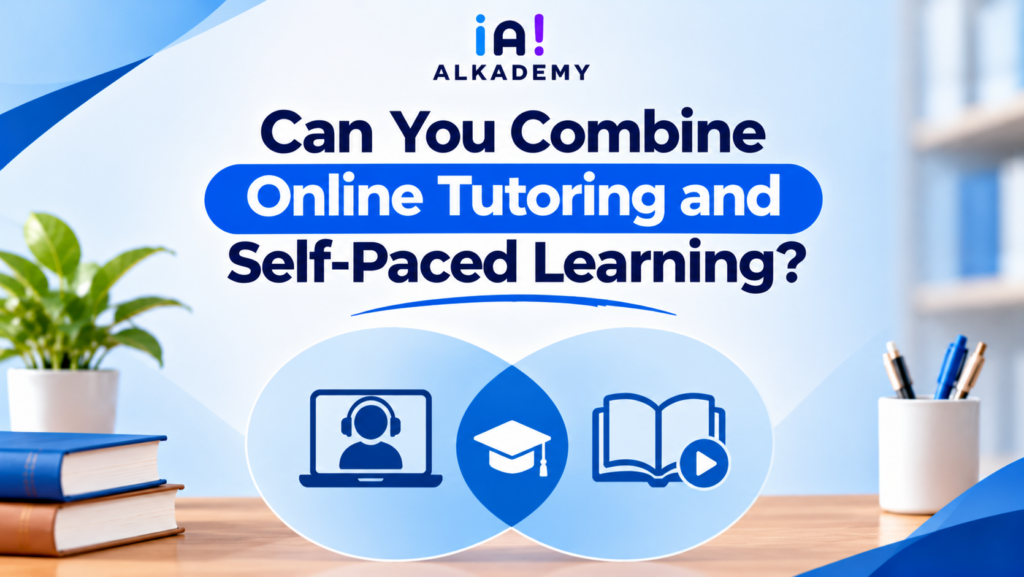
Absolutely. You do not have to choose one approach permanently.
Combining tutoring and independent study can give you the flexibility to learn on your own while receiving help when you need it.
Try this simple routine:
- Learn independently: Start with an online course or relevant learning materials.
- Identify difficult topics: Write down concepts you cannot fully understand.
- Get additional support: Arrange a tutoring session to discuss those challenges.
- Practise regularly: Apply what you have learned through exercises and assignments.
- Review your progress: Test yourself and identify topics that need more attention.
This approach allows you to enjoy the flexibility of independent learning without missing out on valuable instructor guidance.
How to Choose the Right Online Learning Approach
Before enrolling in a course or booking a tutor, consider these five questions:
What do you want to achieve?
Are you preparing for an examination, improving academic performance, or developing a professional skill? Your goal should influence the type of instruction you choose.
How much support do you need?
If you regularly need explanations and feedback, tutoring may be a better starting point. If you can understand lessons independently, a self-paced course may be sufficient.
How much time can you commit?
Consider whether you can attend scheduled sessions or need the flexibility to study whenever you are available.
What is your budget?
Compare course fees, tutoring rates, and any additional learning expenses.
How will you measure progress?
Look for opportunities to complete assignments, practise skills, take assessments, and review your performance.
A good learning approach should help you make consistent progress, not simply give you access to more educational content.
Explore Flexible Learning Opportunities With Alkademy
Access to the right learning resources can make a big difference in your learning experience.
Alkademy brings together online courses, instructors, live learning opportunities, and other educational resources to support different learning needs.
These flexible learning options and instructor support help learners find an approach that suits their goals, schedules, and preferred learning styles.
Here are a few ways to get started:
Explore Online Courses
If you prefer independent learning, explore Alkademy’s online courses.
You can browse courses across areas such as artificial intelligence, programming, data analytics, cybersecurity, and professional development. Explore the available options and choose a course that matches your interests and skill level.
Find Learning Support Through TutorHub
Sometimes, independent study is not enough. You may need someone to explain a difficult concept or guide you through a particular subject.
Alkademy’s TutorHub helps learners discover tutors based on their subjects, availability, and ratings.This is useful when you want additional guidance alongside your independent studies.
If you’re exploring ways to find the right academic support, read our guide on finding expert online tutors for one-on-one personalised training.
Discover Instructors
You can also explore the Alkademy Instructor Marketplace to discover instructors and their areas of expertise.
Review available profiles to find instructors whose subjects and experience align with your learning interests.
Alkademy offers flexible learning opportunities and access to instructor support, helping you find the right approach to achieve your educational goals.
FAQs
Is online tutoring better than self-paced learning?
Neither is automatically better. Online tutoring provides direct guidance and accountability, while self-paced learning offers greater flexibility. Your learning goals and support needs should determine which approach you choose.
Is self-paced learning effective for students?
Yes. Self-paced learning can be effective when students use quality materials, practise regularly, and maintain consistent study habits. Quizzes, assignments, and revision can help reinforce understanding.
Is online tutoring more expensive than self-paced learning?
Online tutoring often costs more because you are paying for personalised instructor time. Self-paced courses may be more affordable, although prices depend on the provider and course content.
Can I learn effectively without a tutor?
Yes. You can develop academic knowledge and professional skills through online courses, books, practice exercises, and other educational resources. However, a tutor can provide additional guidance when you encounter difficulties.
Can I combine online tutoring with self-paced learning?
Yes. You can study foundational topics independently and use tutoring sessions to clarify difficult concepts. This creates a balance between flexibility and personalised support.
Final Thoughts
Online tutoring and self-paced learning offer different ways to develop knowledge and skills. Tutoring gives you access to direct guidance, while self-paced learning allows you to study independently and manage your schedule.
If you need regular support, consider working with a tutor. If flexibility is your priority, start with a self-paced course. You can also combine both approaches as your learning needs change.
Ready to take the next step?
Explore Alkademy and find learning opportunities that fit your goals, schedule, and preferred learning approach.