Compare edX vs FutureLearn, including courses, certificates, pricing, and learning features, to find the best platform for your educational and career goals.
TL;DR
- edX is ideal for learners seeking university-level courses, advanced academic programs, and professional certificates.
- FutureLearn is a good choice for short courses, structured learning, and collaborative discussions.
- Both platforms offer free learning options, but certificates, assessments, and additional features may require payment.
- edX offers specialized programs such as MicroMasters and Professional Certificates, while FutureLearn provides ExpertTracks and microcredentials.
- Alkademy is another option, offering an AI-powered learning ecosystem with online courses, live classes, workshops, and corporate training.
Online learning gives you access to courses from universities and institutions around the world. But with so many platforms available, choosing the right one can be difficult.
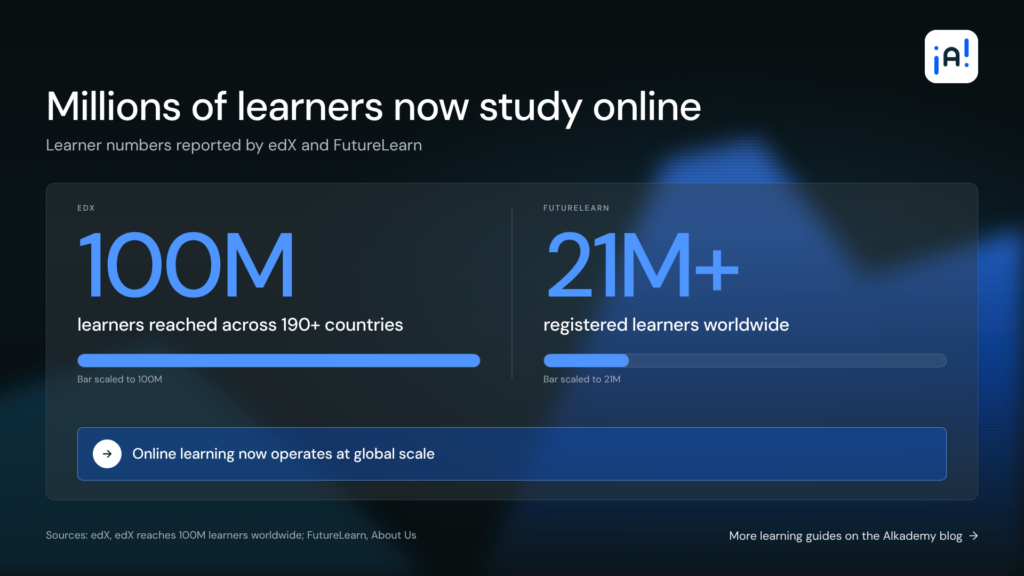
Platforms such as edX and FutureLearn have attracted millions of learners globally. edX reports reaching 100 million learners across more than 190 countries, while FutureLearn reports more than 21 million registered learners.
Despite their global reach, the two platforms differ in their course formats, certificates, pricing, and learning experiences.
This guide compares their key features to help you decide which platform best fits your learning goals.
Table of Contents
What Is edX?
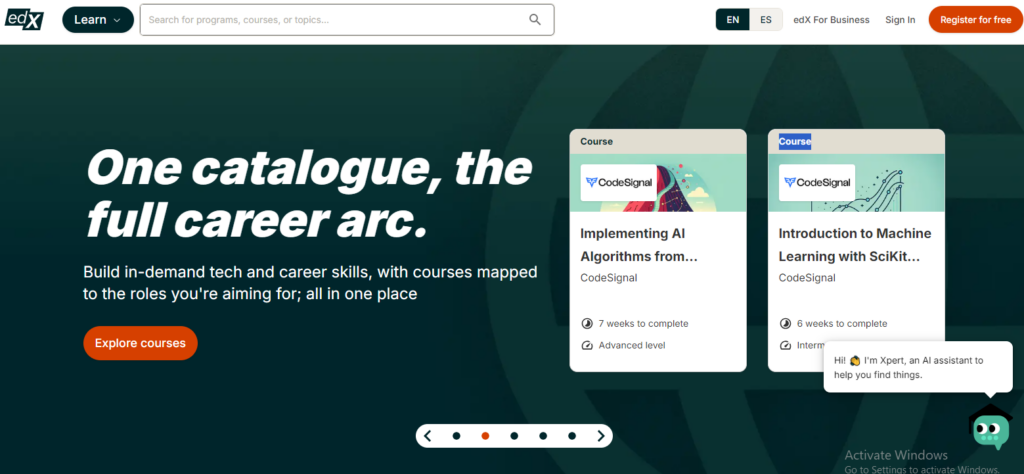
edX is an online learning platform founded in 2012 by Harvard University and the Massachusetts Institute of Technology (MIT).
It provides courses from universities, educational institutions, and industry organizations.
The platform focuses on university-level education, professional development, and specialized skills training. Its courses cover subjects such as computer science, business, engineering, healthcare, mathematics, and the humanities.
You can take individual courses, explore professional certificate programs, or pursue selected advanced learning pathways without necessarily enrolling in a traditional university.
Key Features of edX
It main features includes:
- University-backed courses: Access learning materials developed by established universities and educational institutions.
- Professional Certificates: Develop career-related knowledge through structured programs.
- MicroMasters Programs: Study advanced subjects through postgraduate-level learning pathways.
- MicroBachelors Programs: Explore undergraduate-level learning in selected subjects.
- Free course auditing: Study eligible courses without paying, although graded assessments and certificates are excluded.
- Flexible learning: Choose between self-paced and instructor-paced courses.
Advantages and Disadvantages of edX
Advantages
- Offers courses from established universities.
- Provides access to advanced academic subjects.
- Allows free auditing of eligible courses.
- Offers professional and academic learning pathways.
- Covers a broad range of subjects.
Disadvantages
- Verified certificates require payment.
- Free audit access is temporary.
- Some advanced programs can be expensive.
- Course schedules and requirements vary.
Who Should Use edX?
edX is particularly useful for:
- University students who want to supplement their formal education.
- Working professionals seeking specialized knowledge or career development.
- Career changers exploring new industries and technical skills.
- Advanced learners interested in MicroMasters and other university-level programs.
If academic depth and structured professional learning are your priorities, edX is worth considering.
What Is FutureLearn?
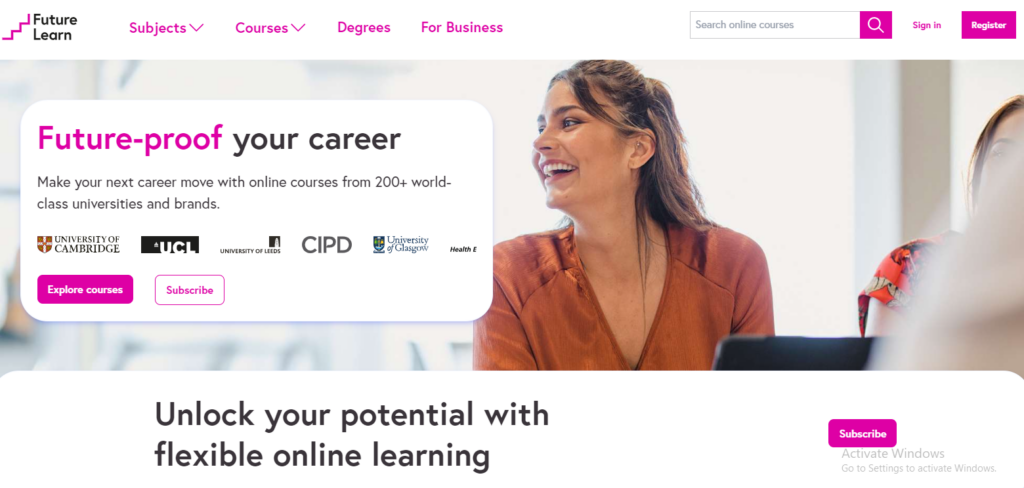
FutureLearn is an online learning platform launched in 2013 by The Open University in the United Kingdom.
It partners with universities and educational organizations to provide online courses, professional development programs, and academic learning opportunities.
One of its defining features is social learning. Rather than simply watching lessons, learners can participate in discussions, share ideas, and interact with other students.
Its courses cover business, healthcare, technology, education, arts, and several other subjects.
Key Features of FutureLearn
It main features includes:
- University-backed courses: Learn through programs developed with educational institutions.
- Short Courses: Explore specific subjects through focused learning experiences.
- ExpertTracks: Build specialist knowledge through collections of related courses.
- Microcredentials: Study selected programs that may provide academic credit or professional recognition.
- Certificates of Achievement: Earn digital certificates after meeting course requirements.
- Social learning: Exchange ideas and participate in discussions with other learners.
- Online degrees: Access selected university degree programs.
Advantages and Disadvantages of FutureLearn
Advantages
- Offers courses from established educational institutions.
- Provides a broad selection of short courses.
- Encourages interaction through course discussions.
- Supports professional development.
- Offers subscription-based access to eligible courses.
Disadvantages
- Free access comes with restrictions.
- Certificates and additional features may require payment.
- Some advanced programs involve separate fees.
- Course availability and access conditions vary.
Who Should Use FutureLearn?
FutureLearn is suitable for:
- Working professionals interested in continuing education.
- University students exploring subjects beyond their regular curriculum.
- Lifelong learners who enjoy discovering new topics.
- Collaborative learners who prefer discussions and shared learning experiences.
If you enjoy shorter courses and learning alongside other people, FutureLearn may be a good fit.
edX vs FutureLearn Compared
| Feature | edX | FutureLearn |
| Main focus | Academic and professional education | Academic and professional education |
| Course formats | Self-paced and instructor-paced | Structured short courses |
| Free learning | Free audit on eligible courses | Limited access on eligible courses |
| Certificates | Verified Certificates | Certificates of Achievement |
| Advanced programs | MicroMasters, MicroBachelors, Professional Certificates | ExpertTracks and microcredentials |
| Learning experience | Independent and structured | Discussion-based and collaborative |
| Degree options | Selected university programs | Selected university programs |
| Best for | Advanced academic and professional learning | Short courses and social learning |
edX vs FutureLearn: Key Features Comparison
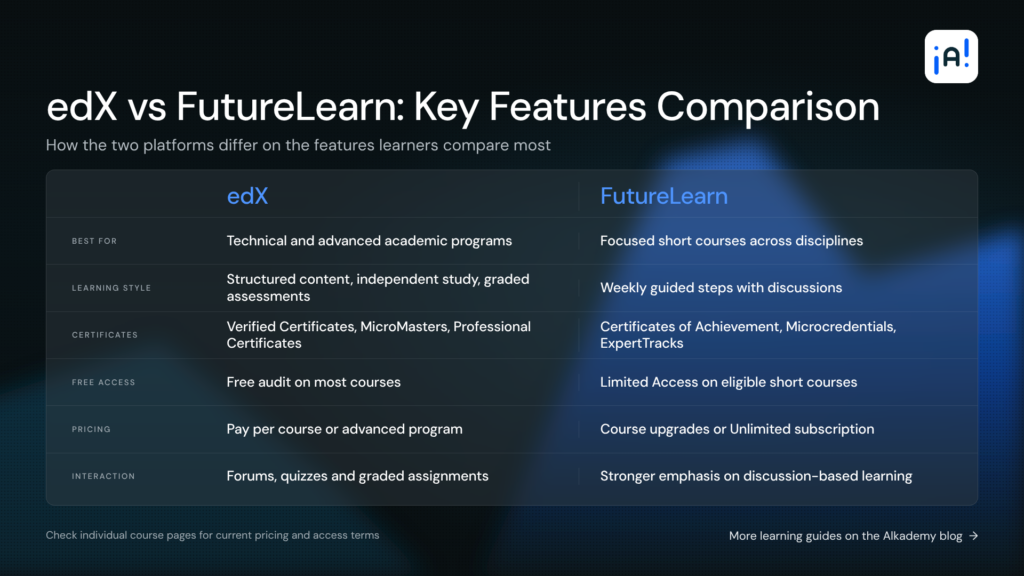
Understanding the differences between these platforms can help you avoid paying for a course that does not meet your expectations.
Let’s compare the features that matter most:
Course Variety and Subject Coverage
Both platforms offer courses across academic and professional disciplines, but their program structures differ.
Our guide to online learning platforms explores how these platforms work and the features learners should consider when choosing one.
edX has a strong focus on:
- Computer science and information technology.
- Business and management.
- Engineering and mathematics.
- Healthcare and public health.
- Science and humanities.
It offers everything from introductory courses to advanced academic and professional programs.
FutureLearn covers areas such as:
- Business and management.
- Healthcare and medicine.
- Education and teaching.
- Technology and digital skills.
- History, culture, and the arts.
It also places considerable emphasis on short courses that let learners explore specific subjects.
Which offers better course variety?
Both provide broad subject coverage.
edX is particularly attractive for learners seeking technical and advanced academic programs, while FutureLearn is appealing for those interested in focused courses across different disciplines.
The best choice depends on the specific subject and course rather than the size of the platform’s catalog alone.
Course Quality and University Partnerships
A course’s quality depends on more than the platform hosting it.
The institution delivering the course, the instructor’s expertise, the curriculum, and the assessment methods all matter.
edX works with universities and industry organizations to deliver academic and professional courses.
FutureLearn also partners with universities and educational institutions, with many courses developed by subject specialists and experienced educators.
Both platforms provide access to educational content from established institutions.
However, a university partnership does not automatically make every course accredited or eligible for academic credit.
Which offers better course quality?
Neither platform is automatically better. Compare the individual course syllabus, instructor information, learning outcomes, and assessments before enrolling.
Learning Experience and Course Structure
The way you study can make a significant difference to your learning experience.
edX combines video lectures, reading materials, quizzes, practice exercises, and graded assessments. Depending on the course, you can study independently or follow an instructor-led schedule.
FutureLearn organizes many courses into weekly learning steps. These typically combine videos, articles, quizzes, and discussions to guide learners through each topic.
Here’s the main difference:
- edX: Better suited to learners who prefer structured academic content, independent study, and formal assessments.
- FutureLearn: A good option for learners who enjoy guided activities and discussions with other students.
Your experience will still depend on the course you select.
Certificates and Professional Qualifications
Certificates can help demonstrate your learning, but not all online credentials have the same value.
Understanding what each certificate represents is important before paying for a program.
edX Certificates
edX offers Verified Certificates for eligible courses. You generally need to enroll in the paid verified track and meet the course’s assessment requirements.
Its advanced learning options include:
- Professional Certificates.
- MicroBachelors Programs.
- MicroMasters Programs.
- Executive Education programs.
Some programs may provide academic credit or pathways to further education, depending on the institution and specific requirements.
FutureLearn Certificates
FutureLearn offers Certificates of Achievement for eligible courses. Learners must meet the relevant completion and assessment requirements.
Other learning options include:
- ExpertTracks.
- Microcredentials.
- Professional Certificates.
- Selected academic degree programs.
Some microcredentials offer academic credit or professional recognition, depending on the awarding institution.
Which offers better certificates?
edX is worth considering if you want advanced academic or professional learning pathways.
FutureLearn is suitable for learners interested in shorter courses and continuing professional development.
Before enrolling, check whether the credential is a completion certificate, assessed achievement, academic credit, or a formally recognized qualification. These are not interchangeable.
Free Courses and Accessibility
You don’t always need to pay to start learning on either platform. However, free enrollment does not necessarily provide access to every course feature.
Free Courses on edX
Most edX courses offer a free audit option.
Depending on the course, you can access:
- Video lectures.
- Reading materials.
- Discussion forums.
- Ungraded practice exercises.
However, free auditing does not include verified certificates or graded assessments. Access to course materials is also temporary.
Free Courses on FutureLearn
FutureLearn offers Limited Access on eligible short courses.
This allows you to explore course materials without purchasing an upgrade.
However, free learners generally cannot:
- Access all course content immediately.
- Complete restricted test activities.
- Earn course certificates.
- Keep access to completed course materials indefinitely.
Which is better for free learning?
Both platforms are useful if you want to explore a subject before paying.
edX is a good option for auditing eligible academic courses, while FutureLearn works well for sampling short courses and deciding whether to upgrade.
Check the access conditions on individual course pages before enrolling.
Our article on the best platforms to get free AI courses with certificates explores some options for beginners interested in developing AI knowledge without paying for courses.
Pricing and Subscription Plans
Pricing is an important consideration, particularly if you plan to take several courses.
edX Pricing
edX offers free auditing and paid enrollment options.
Verified certificates and advanced programs require payment, with prices depending on the course, institution, and program type.
For accurate pricing, check the enrollment page of your chosen course before paying.
FutureLearn Pricing
FutureLearn offers individual course upgrades and subscription-based access through its Unlimited plans.
Subscribers can access eligible short courses and earn digital certificates when they meet the relevant requirements. However, some programs, including selected ExpertTracks, microcredentials, and degrees, require separate enrollment.
Check the FutureLearn Unlimited page for current subscription options and terms.
Which offers better value?
It depends on your learning plans.
- Choose edX if you want to pay for specific courses or pursue an advanced program.
- Consider FutureLearn Unlimited if you intend to complete several eligible short courses during your subscription.
Compare the available features, course access, and subscription conditions before deciding.
Flexibility and Learning Pace
Flexibility matters when you’re balancing education with work, school, or other responsibilities.
edX offers both self-paced and instructor-paced courses. This allows learners to choose programs that fit their schedules, although some courses have deadlines and fixed assessment periods.
FutureLearn also provides structured courses, many of which follow weekly learning activities. Its Unlimited subscription gives learners greater flexibility to access eligible course materials during their subscription period.
Which platform is more flexible?
Both accommodate different schedules. edX offers useful self-paced academic options, while FutureLearn works well for learners who prefer guided courses with organized learning activities.
Always check course deadlines and access periods before enrolling.
Interactive Learning and Student Engagement
Learning online doesn’t have to mean studying alone.
Both platforms provide opportunities to engage with course materials and other learners.
On edX, you can participate through:
- Discussion forums.
- Quizzes and practice exercises.
- Graded assignments.
- Examinations and peer-learning activities where available.
FutureLearn places more emphasis on social learning through:
- Course discussions and comments.
- Interactive quizzes.
- Peer participation.
- Collaborative learning activities.
Which offers better interaction?
FutureLearn has a stronger emphasis on discussion-based learning. edX also provides interactive activities, particularly through its assessments and discussion forums.
If exchanging ideas with other learners is important to you, FutureLearn is worth exploring.
Mobile Learning and User Experience
Mobile access makes it easier to study when you’re away from your computer.
Both edX and FutureLearn provide mobile learning options, allowing users to access supported course materials and continue learning on compatible devices.
When comparing their mobile experiences, consider:
- How easy it is to find and enroll in courses.
- Whether lessons are easy to navigate.
- Access to videos and reading materials.
- Compatibility with assessments.
- Whether your progress synchronizes across devices.
Which has a better mobile experience?
Both support mobile learning.
Your experience will depend on the course and the activities you need to complete. Check whether important assessments require a desktop browser before relying entirely on your phone.
Which Is Better: edX or FutureLearn?
The best platform depends on what you want to accomplish.
Both offer valuable learning opportunities, but they appeal to slightly different types of learners.
When Should You Choose edX?
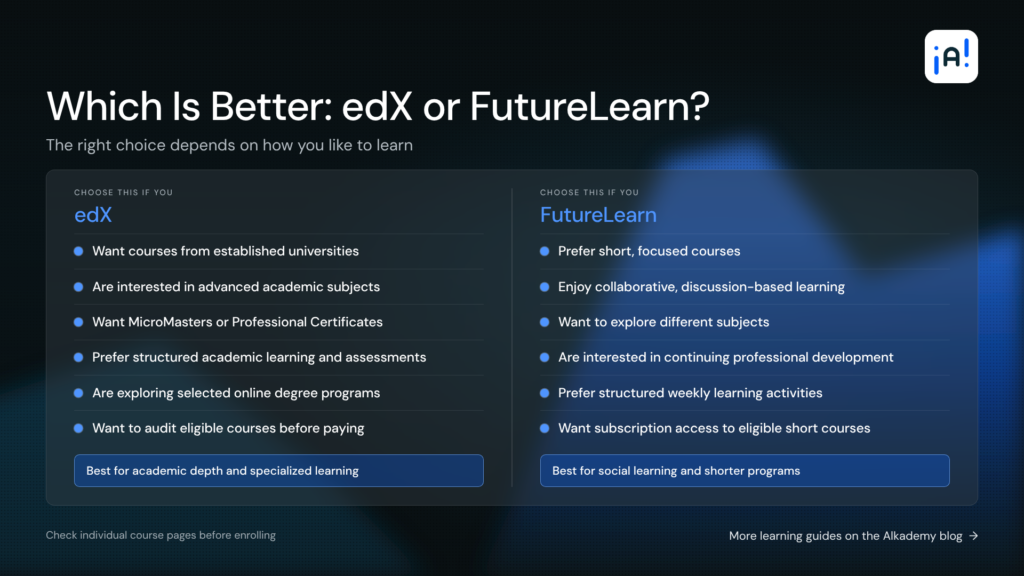
Consider edX if you:
- Want courses from established universities.
- Are interested in advanced academic subjects.
- Want to pursue MicroMasters or Professional Certificate programs.
- Prefer structured academic learning and assessments.
- Are exploring selected online degree programs.
- Want to audit eligible courses before paying.
edX is a strong choice if academic depth and specialized professional learning are your priorities.
When Should You Choose FutureLearn?
Consider FutureLearn if you:
- Prefer short, focused courses.
- Enjoy collaborative and discussion-based learning.
- Want to explore different subjects.
- Are interested in continuing professional development.
- Prefer structured weekly learning activities.
- Want subscription-based access to eligible short courses.
FutureLearn is particularly suitable if you enjoy social learning and want to develop knowledge through shorter programs.
Best Alternative to edX and FutureLearn
While edX and FutureLearn provide valuable online learning opportunities, you may want a platform that offers more than conventional self-paced courses.
That’s where Alkademy comes in.
Alkademy: An AI-Powered Online Learning Ecosystem
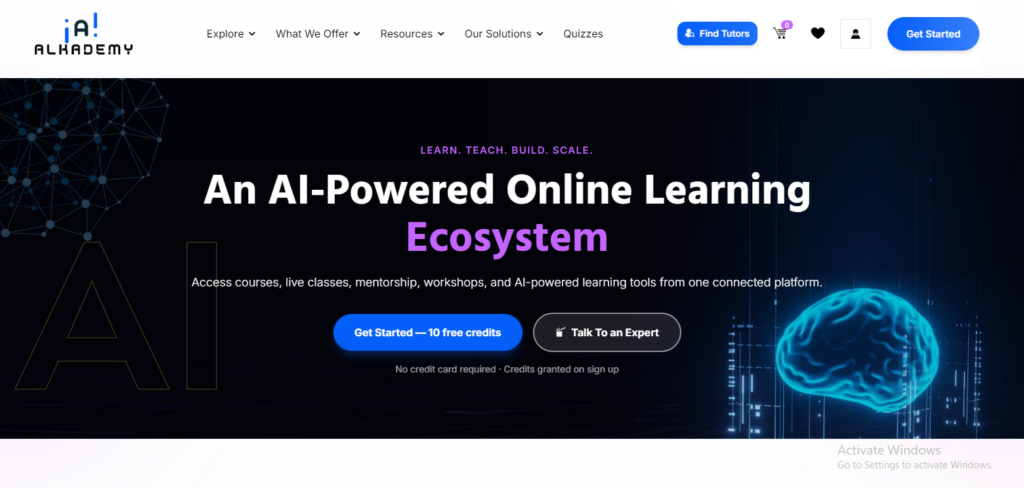
Alkademy is an AI-powered online learning ecosystem designed to make education and skills development more accessible.
It brings together different educational opportunities, giving individuals and organizations multiple ways to engage with learning.
Its offerings include:
- Online Courses: Explore educational content covering different subjects and professional skills.
- Live Classes: Participate in interactive learning sessions with instructors.
- Workshops: Develop practical knowledge through focused learning activities.
- Corporate Training Solutions: Support employee development through structured organizational training.
- Tutor and Instructor Marketplace: Connect with educators and instructors for additional learning support.
While edX and FutureLearn focus primarily on structured online courses and academic learning pathways, Alkademy brings together multiple learning formats within one ecosystem.
This makes it an option worth exploring if you want to combine independent learning with instructor-led sessions, practical workshops, or additional educational support.
Students looking to develop new skills, professionals pursuing career growth, and organizations seeking effective training solutions can explore Alkademy for flexible and engaging online learning opportunities.
How to Choose the Right Online Learning Platform
Before enrolling in a course, think about what you want to achieve and how a platform can help you get there.
Here are seven things worth considering:
- Learning objectives: Identify the knowledge or skills you want to develop.
- Course credibility: Check the institution, instructor, and organization responsible for the course.
- Certificates: Determine whether the credential meets your academic or professional requirements.
- Learning format: Decide whether you prefer self-paced courses, structured lessons, live classes, or discussions.
- Pricing: Compare course fees, subscription plans, and free learning options.
- Flexibility: Check schedules, deadlines, and access periods.
- Practical learning: Look for assignments, projects, workshops, and exercises that help you apply what you learn.
A good online learning platform should match your goals, budget, and preferred learning style. Don’t choose based on popularity alone. Review the course content and requirements before committing.
FAQs
Is edX better than FutureLearn?
Neither platform is universally better. edX is particularly useful for learners interested in advanced academic subjects and professional qualifications. FutureLearn is a good option for those who prefer short courses and collaborative learning. Your choice should depend on your goals and preferred learning format.
Are edX and FutureLearn courses free?
Both platforms offer free learning options. edX provides free auditing on eligible courses, while FutureLearn offers Limited Access to selected courses. However, certificates, graded assessments, and some additional features require payment.
Do edX and FutureLearn offer recognized certificates?
Yes, both offer certificates for eligible courses and programs. However, a course-completion certificate is not automatically an accredited academic qualification. Check the issuing institution, assessment requirements, and recognition of the specific credential before enrolling.
Which is better for professional development, edX or FutureLearn?
Both support professional development. edX is worth considering for specialized training and advanced certificate programs, while FutureLearn offers short courses and professional learning opportunities. Compare individual course outcomes to determine which best supports your career goals.
Can you earn a degree through edX or FutureLearn?
Yes. Both platforms provide access to selected online degree programs through participating universities. Admission requirements, tuition fees, and available qualifications vary. The relevant university awards the degree, so review the institution and program details before applying.
Final Thoughts on edX vs FutureLearn
edX and FutureLearn are both useful platforms for online education, but they serve different learning preferences.
edX is a strong choice for advanced academic learning and specialized professional programs, while FutureLearn is suitable for short courses and collaborative learning.
However, you have other options. If you’re looking for a broader learning ecosystem that combines online courses, live classes, workshops, and corporate training, consider exploring Alkademy.
The right platform is ultimately the one that helps you build relevant knowledge, develop practical skills, and make meaningful progress towards your learning goals.